Why Floating Roof Secondary Seals Fail Early — And What Actually Prevents It
If you manage or maintain floating roof storage tanks, you have probably seen a secondary seal go wrong before its time.
Contact pressure drops within months. The rubber hardens or shrinks after exposure. Oil bleeds through and contaminates the primary seal. Or the seal tears during installation before it has even started doing its job.
These are not rare incidents. They are common enough that most overhaul contractors have a story.
What is less common is a clear explanation of why it happens — and what a well-designed secondary seal actually does differently.
This article covers both.
What a Floating Roof Secondary Seal Actually Does
A floating roof tank has two seals working together — a primary seal closer to the tank shell, and a secondary seal mounted above it, exposed to the elements.
The primary seal handles the main job of preventing vapour escape at the rim. The secondary seal works as a second line of defence. It catches emissions that get past the primary, keeps out rain and debris, and must maintain firm contact with the tank shell even as the roof moves up and down with changing liquid levels.
That last part — maintaining contact across continuous movement — is where most secondary seals struggle.
The roof does not sit still. It rises and falls with the product level. It also moves slightly sideways due to wind, thermal expansion, and structural variation in the tank shell. A secondary seal that performs well on the first day needs to keep performing through thousands of small movements over months and years.
Most failures happen because the seal’s rubber compound is not designed for this reality.
Five Failure Patterns Seen in the Field
1. Loss of contact pressure within months
This is the most common complaint. The seal installs correctly, looks fine during commissioning, and then gradually stops pressing firmly against the shell. Localised leakage begins. Emission readings rise.
The cause is usually high compression set — a measure of how much a rubber loses its springback after being compressed. A compound with poor compression set behaviour takes a fixed shape over time and stops recovering. It cannot push back against the shell.
2. Hardening and shrinkage after exposure
Floating roof secondary seals sit in the open. They face ultraviolet radiation, ozone, wide temperature swings, and sometimes harsh chemical vapours from the product stored below.
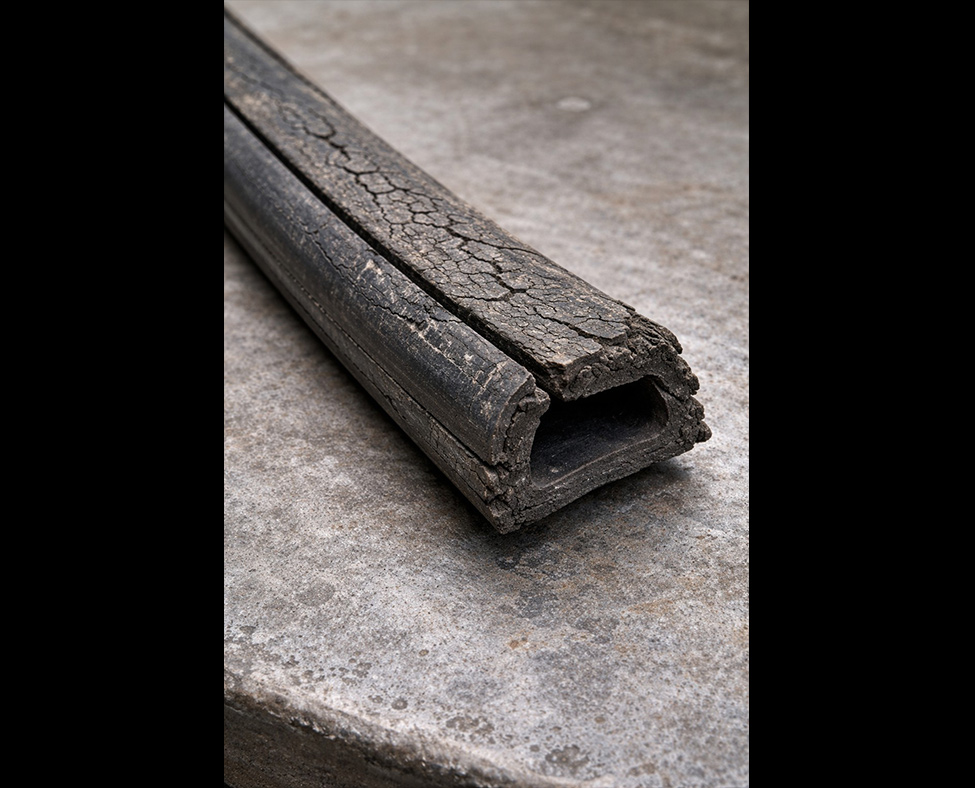
Rubber compounds that are not specifically formulated for this exposure will harden, become brittle, or shrink. Once hardening begins, contact with the shell becomes uneven. Gaps appear. The seal becomes a visual compliance problem, not just a functional one.
3. Oil bleed contaminating the primary seal
Some secondary seals, particularly those made with lower-quality compounds, allow the plasticiser or processing oils in the rubber to migrate to the surface over time. This bleed can drip down and contaminate the primary seal or the shoe plate below it — accelerating wear in both.
This problem is almost never visible in a lab test. It shows up in service, typically after several months.
4. Tearing during installation
A secondary seal needs to be installed around the full circumference of a large floating roof. This means it gets stretched, bent, and pressed into position over a long distance.
Seals that are brittle, poorly extruded, or have weak splice points tear during this process. Installers sometimes repair the tear and proceed, which means the seal goes into service already compromised.
5. Uneven contact due to geometry distortion
The cross-sectional profile of the seal determines how it makes contact with the shell. If the extrusion is inconsistent — varying in thickness or shape along its length — the contact pressure will be uneven. Some sections press firmly, others barely touch.
This kind of failure is invisible at first. It only reveals itself during inspection or when localised emission hotspots are detected.
What Makes a Secondary Seal Reliable
A well-designed floating roof secondary seal starts from the failure modes, not from a generic rubber specification.
Polymer loading matters more than most buyers realise. The proportion of base polymer in the compound directly affects long-term elasticity. Higher polymer loading means the seal retains its rubber-like behaviour over time. Lower loading, often done to reduce cost, means faster property loss in service.
Compression set is the right metric to evaluate — not just hardness. Hardness tells you how stiff the seal feels. Compression set tells you whether it will recover and push back after being compressed for months. These are different things. A seal can feel appropriately firm and still have poor elastic recovery.
Oil resistance must be built into the formulation. This means selecting the right base polymer and avoiding process oils that migrate. For crude oil or petroleum product applications, the compound needs to be tested against the actual service fluid, not just a generic oil.
Ozone and weathering resistance require specific additives. Antiozonants and antioxidants are not optional for a seal that spends its life outdoors. Their inclusion — and the correct loading level — determines how the seal ages.
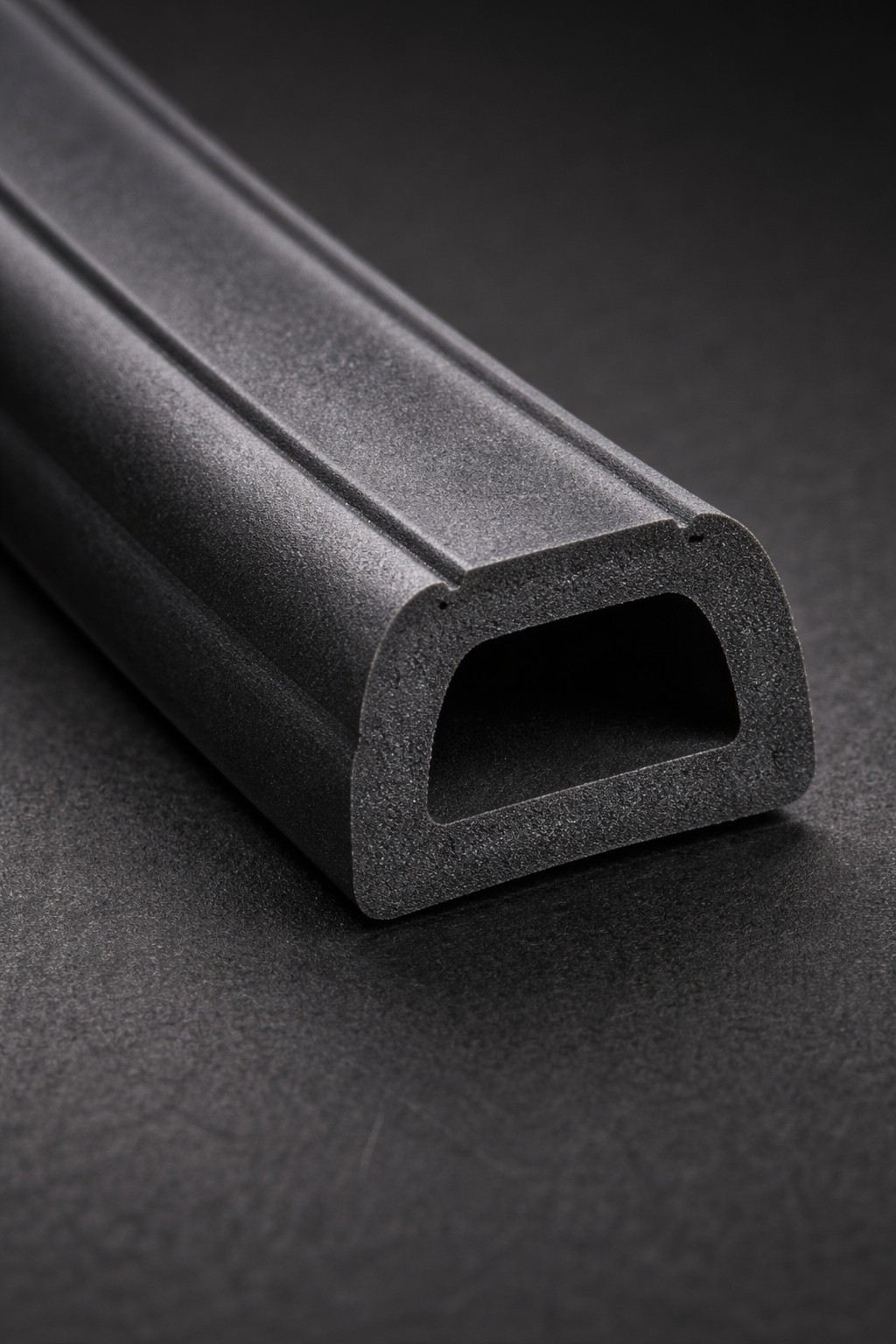
Extrusion geometry must be consistent. A well-designed profile means nothing if production tolerances are loose. Consistent cross-section across the full length of the seal is what translates design intent into uniform contact pressure around the tank.
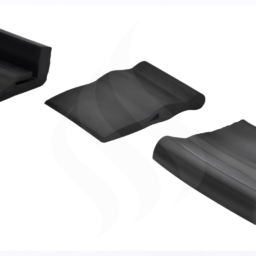
At Saga Elastomer, we have been designing rubber sealing compounds for over 30 years. Our secondary seals for floating roof tanks are formulated from the failure modes upward — with compound and geometry treated as a system, not two separate decisions.
How to Evaluate a Secondary Seal Before You Buy
When comparing options, these are the right questions to ask:
- What is the compression set value, and under what test conditions was it measured?
- What base polymer is used, and why was it selected for this application?
- Has the compound been evaluated against oil migration or bleed?
- What are the production tolerances on the extrusion profile?
- Can samples be tested before full order commitment?
A supplier who can answer these questions with specific numbers and reasoning is a fundamentally different partner than one who hands you a datasheet with hardness and tensile values only.
A Note on Emission Compliance
API 650 Annex C sets requirements for floating roof seal systems as part of emission control. Regulators and refinery operators increasingly enforce these requirements — not just at commissioning but during periodic inspections.
A secondary seal that loses contact pressure or develops gaps does not just create a maintenance problem. It creates a compliance risk. The cost of an unplanned inspection, the cost of rework mid-overhaul, and the cost of emission penalties are all significantly higher than the cost of choosing a better seal in the first place.
Contractors and EPCs who have worked through this once tend to change how they specify seals on the next project.
FAQs
What causes a floating roof secondary seal to fail early?
The most common causes are high compression set (the rubber stops recovering after compression), hardening or shrinkage from ozone and UV exposure, oil bleed from low-quality compounds, and inconsistent extrusion geometry that creates uneven contact with the tank shell.
How long should a floating roof secondary seal last?
A well-formulated secondary seal should last through at least one full overhaul cycle — typically five to seven years — without significant loss of contact pressure or visible degradation. Seals that fail within one to two years are almost always a compound or geometry problem, not a usage problem.
What rubber compound is best for floating roof secondary seals?
There is no single answer — it depends on the product stored, the climate, and the tank design. For petroleum product tanks, oil-resistant compounds with good ozone stability and controlled compression set behaviour are the starting point. Compound selection should be matched to the specific application, not taken from a standard catalogue.
What is compression set in a rubber seal?
Compression set measures how much a rubber material permanently deforms after being compressed for a period of time. A low compression set means the seal recovers well and continues pressing against the tank shell. A high compression set means the seal takes a fixed shape over time and loses its sealing force.
How does a secondary seal help with emission compliance?
Floating roof tanks are regulated emission sources. The secondary seal, working with the primary seal, reduces vapour escape at the rim gap between the floating roof and the tank shell. A seal that maintains contact pressure consistently keeps emission levels within the permitted limits required by API 650 Annex C and applicable environmental regulations.
Final Thought
Secondary seal failures are predictable. The failure modes are well understood. The design responses are known.
What is less common is a supplier who designs from those failure modes rather than from a price point.
If you have seen a secondary seal fail on a recent project — or if you are specifying seals for an upcoming overhaul and want a technical discussion before you decide — we are happy to talk through the application.
No generic quoting. No push without understanding.
👉Contact Saga Elastomer- Discuss your application
Saga Elastomer Pvt. Ltd. (SEPL) is an ISO 9001:2015 and IATF 16949:2016 certified rubber products manufacturer based in Palghar, Maharashtra. With over 30 years of experience in custom rubber compound development and precision extrusion, SEPL supplies sealing solutions to refinery, storage, and infrastructure projects across India and international markets.